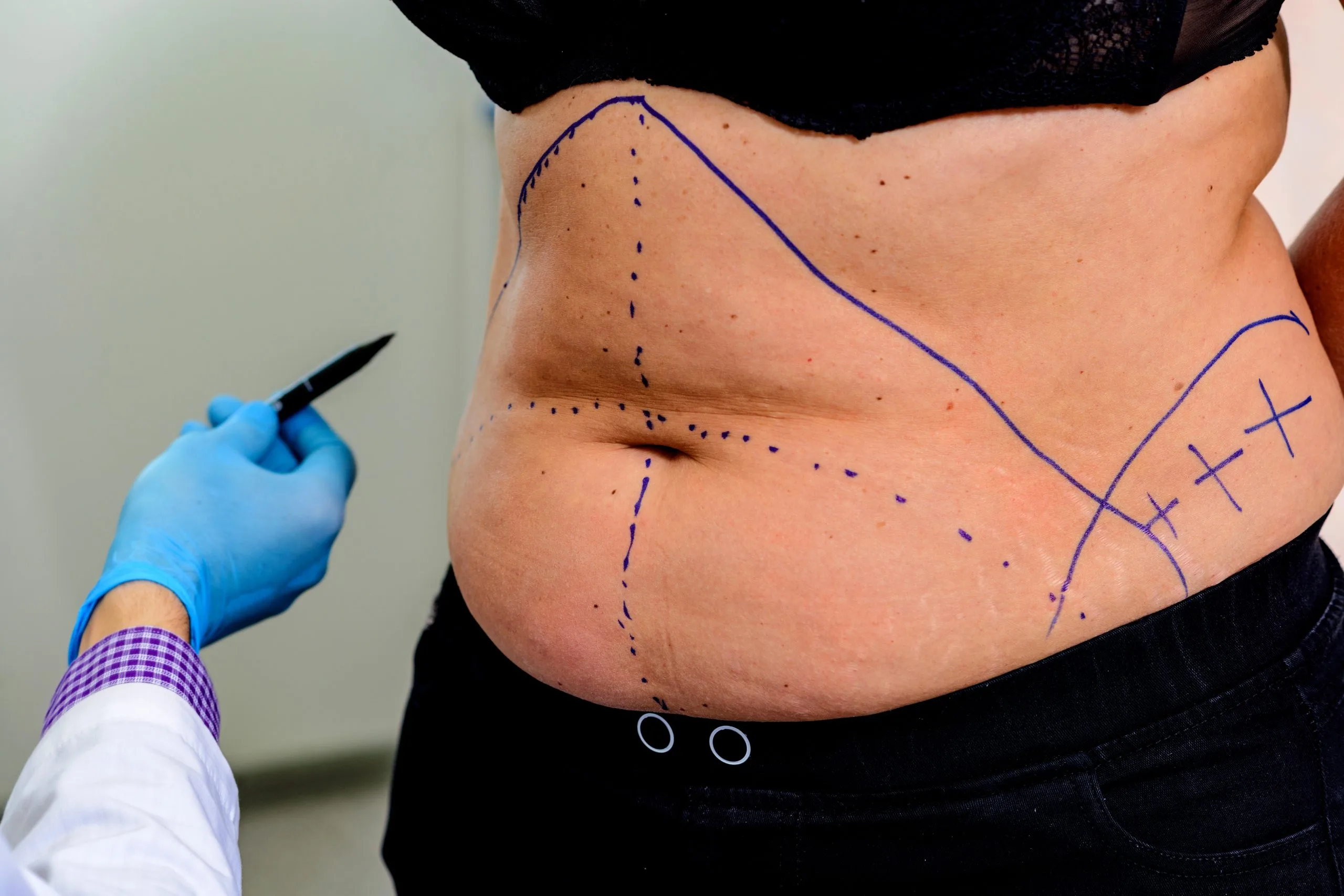
A mommy makeover is often performed in stages to maximize safety and comfort. Splitting your procedures into two planned surgeries is the right choice for many women, especially those who need extensive abdominal and breast work, have limited help at home, or want the safest possible operating time. For other patients, a single well-planned surgery accomplishes everything at once with one recovery.
At Revive Surgical Institute in Coral Gables, mommy makeovers are fully customizable to your anatomy and goals. That flexibility is exactly why staging is worth understanding before you commit to a surgical date. This guide walks you through how the decision gets made, what changes between a one-stage and two-stage plan, and how to tell which path fits your life.
A mommy makeover is not one operation. It is a personalized combination of body contouring and breast procedures chosen to address the changes pregnancy, childbirth, breastfeeding, and weight fluctuation leave behind – loose abdominal skin, separated abdominal muscles (diastasis recti), stubborn fat around the waist and flanks, and breasts that have lost volume or position.
Two women scheduled for a “mommy makeover” in the same week may have very different surgeries. One might have a full tummy tuck with muscle repair and a breast lift. Another might have liposuction with skin tightening and a breast augmentation. This is why the consultation matters more than the label.
Staging means intentionally dividing your procedures into two (occasionally three) separate surgical sessions, usually spaced three to six months apart. It is not a sign that something went wrong or that you were turned down. It is a design decision, planned from the beginning, with each stage chosen to accomplish defined goals within a safe and comfortable operating window.
Yes – and it is done this way regularly. A typical two-stage plan might look like:
Stage one: Tummy tuck with muscle repair and Lipo 360
Stage two (3–6 months later): Breast lift with augmentation, plus any secondary contouring such as arm or thigh work
Or the reverse, if breast concerns are your top priority. Either sequence is legitimate. What matters is that both stages are mapped out in advance so the second surgery complements the first rather than correcting it. Staging also lets your surgeon perform more extensive or complex work in each area without the time pressure of an exceptionally long single operation.
Real advantages of a single-stage approach:
One anesthesia event, one recovery. You take time off work once and arrange childcare once.
One garment period. Compression and activity restrictions overlap instead of repeating.
Faster arrival at the final result. You see the complete transformation in one healing timeline.
Less total time off work. Consolidated recovery can mean less time away from your job and responsibilities.
Simpler logistics for travel patients. One trip to Coral Gables instead of two.
For a healthy patient with moderate goals, this is often the sensible choice.
Staging tends to be the stronger plan when:
The combined procedure list would require a very long operative time
You want extensive work – abdomen, breasts, arms, and thighs, for example
You are at a higher BMI or have health factors that favor shorter surgeries
You have young children and limited help, and a shorter, more manageable recovery matters
Precision matters more than speed, such as when breast symmetry or waist definition is your dominant goal
You want the option to refine stage two based on how your body actually healed from stage one
Your schedule is easier to fit around two shorter recoveries
The decision comes out of your consultation, not a rulebook. Your surgeon weighs total operative time, your health profile, your anatomy, your recovery support at home, and your priorities. If the full plan can be accomplished safely in one session and you have adequate help at home, single-stage is usually recommended. If either condition is shaky, staging is proposed. Keeping operative time within a reasonable window is a core principle of thoughtful surgical planning – and a major reason staging exists.
Revive Surgical Institute operates as a Quad A-accredited facility with MD anesthesia providers. Part of that standard is declining to cram an unlimited number of procedures into a single session simply because a patient requests it. If your surgeon recommends splitting your plan, that recommendation is protective and necessary.
Recovery depends less on whether your makeover is staged and more on which procedures you have performed. A tummy tuck with muscle repair creates a different recovery than breast augmentation alone, and combining multiple procedures naturally increases the physical demands of healing.
With a single-stage approach, all healing happens at once. While this means only one recovery period, it is often the most physically demanding because your abdomen, breasts, and any liposuction areas may all be healing simultaneously.
The first 1–2 weeks to require significant rest and assistance with childcare, household tasks, and lifting.
Walking to begin immediately after surgery, while strenuous activity is restricted for several weeks.
Most patients return to desk work in approximately 2–3 weeks, depending on the extent of surgery.
Exercise, heavy lifting, and core workouts are typically postponed for 6–8 weeks, particularly after abdominal muscle repair.
Swelling continues to improve over several months, with final contour refinement developing gradually.
Although the recovery is more intensive upfront, many patients appreciate completing the entire process with a single period away from work and family responsibilities.
A staged makeover divides recovery into two shorter healing periods. Each operation is generally easier to tolerate because fewer areas of the body are healing at the same time.
For example:
Stage one: A tummy tuck with muscle repair and Lipo 360 typically involves the longer recovery, with lifting restrictions and limited core activity for several weeks.
Stage two: Breast surgery performed several months later often has a quicker recovery because patients can move comfortably without abdominal restrictions, although arm movement and upper-body activity remain temporarily limited.
Many patients describe each recovery as more manageable because they can focus on healing one major area before moving on to the next stage. This approach may also be easier for parents of young children or individuals who have difficulty arranging several weeks of full-time assistance at home.
Most surgeons recommend waiting three to six months between procedures. This allows swelling to resolve, tissues to soften, and your body to fully recover before undergoing another operation.
Skin and fat removed during a tummy tuck or liposuction do not come back, and muscle repair is durable when it is not stressed by another pregnancy or significant weight gain. Most patients maintain their results for many years with stable weight and regular activity.
Breast results are somewhat different. Gravity, aging, and weight change continue over time, so a lift may soften after a decade or more, and implants may eventually be exchanged. That is normal maintenance, not failure.
In many cases, yes – and this is one of the strongest arguments for staging. Shorter surgeries mean sustained precision, with a less fatigued surgeon able to dedicate meticulous focus to each component. Sequenced surgeries also let stage-two decisions be based on your healed proportions rather than predictions. For plans involving complex breast reshaping or extensive skin removal, staging can genuinely produce a more refined outcome.
Choosing two stages does not mean settling for less. The final destination is identical – you are simply taking a different route, one with two shorter recoveries and more opportunities to fine-tune along the way. Patients frequently report that staging felt less overwhelming than expected, precisely because each recovery was more manageable.
Ask yourself these questions:
How many procedures are on my wish list – two, or four?
Does my abdomen need extensive work, including muscle repair or extended skin removal?
Is my breast plan simple, or does it involve lifting, revision, or asymmetry correction?
Who is available to help me at home, and for how long?
How much time can I realistically take away from work and parenting?
Would I rather have one demanding recovery, or two lighter ones?
Do I want the flexibility to adjust my plan after seeing how stage one heals?
If your answers point toward an ambitious procedure list, limited home support, or complex breast goals, staging deserves serious consideration. If you have a focused plan and solid support, one surgery may serve you well. The honest answer only emerges in a private consultation, where your anatomy, health, and life circumstances are assessed together.
A mommy makeover is a customized plan, and staging is one of the tools that makes customization possible. Single-stage surgery offers one anesthesia event, one recovery, and a faster path to your final result. A staged approach offers shorter surgeries, lighter individual recoveries, and the ability to refine stage two based on how stage one healed. Both reach the same destination: a natural-looking result that makes you feel whole again.
The deciding factors are the scope of your procedure list, your health profile, and the realities of your home and work life. To find out which approach fits your goals, schedule a consultation at Revive Surgical Institute in Coral Gables, FL.

About the Author
Dr. Morad Askari, MD, MBA, FACS
July 28, 2026